
Give each page a clear job.
We separate automotive, residential and commercial information where your offer supports it. Urgent calls get a clear route; scheduled work gets enough detail to make a useful request.
Make the right service easy to find.
Quips plans, writes and builds locksmith websites around your real services, coverage and hours. Give urgent callers a clear phone option and help customers request planned residential, automotive or commercial work.
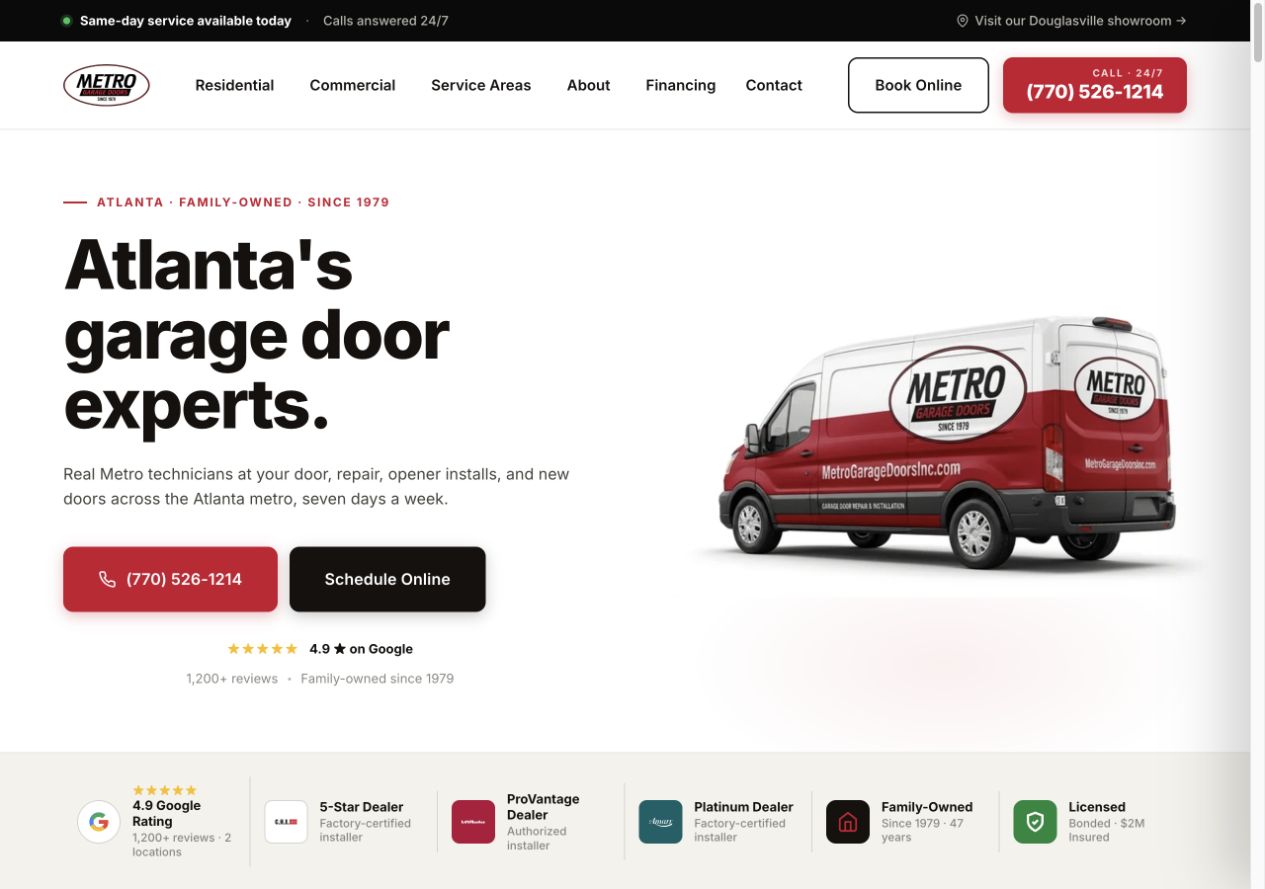
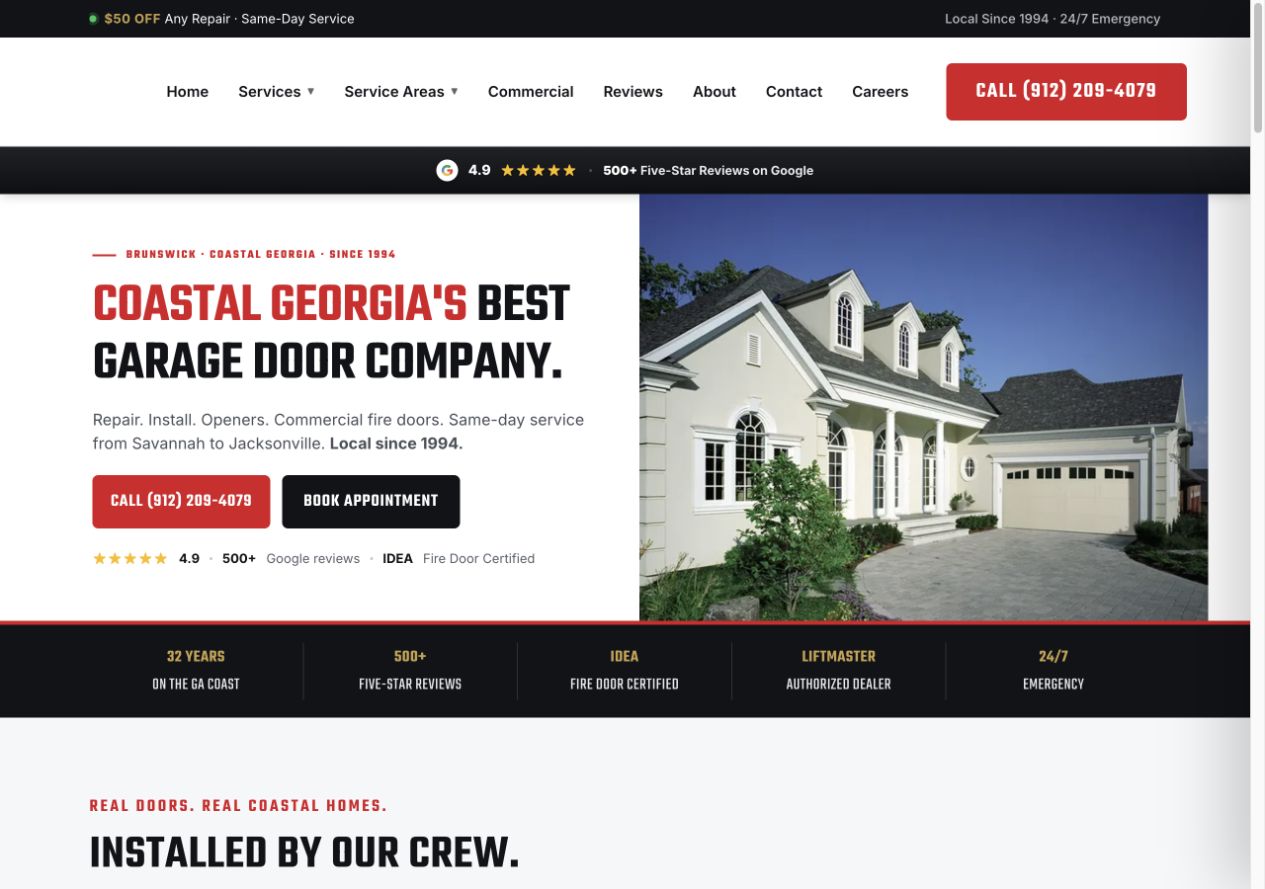
Garage door projects designed by our team with Garage Door Partners. Screenshots from the original projects.
A locked-out driver and a property manager planning a rekey need different information. We organize the site around the services your locksmiths actually provide.
Explore our website serviceWe separate automotive, residential and commercial information where your offer supports it. Urgent calls get a clear route; scheduled work gets enough detail to make a useful request.
AI assists research and drafts; our team edits the copy, and yours verifies vehicle support, service hours, coverage and credentials. We use the business details and service promises your team can stand behind.
We check service information, call links and request forms on smaller screens, with readable text, clear labels and keyboard access.
We test form delivery, notifications and the customer's confirmation. If booking or customer-management system (CRM) connections are included, we check the agreed handoff before launch.
Keep the phone option easy to find while giving planned work a proper place. Each service page should explain who you can help and what happens next.
Keep the phone link, actual coverage and answering hours prominent. Your team confirms whether it can take the job and when.
Make a call easy without promising immediate dispatch.
Give planned rekeys, lock changes and car key work clear explanations. Separate vehicle details from property details where it helps.
Offer a planned-service request alongside the phone option.
Explain the types of commercial work you take on and who should contact the business. Describe access-control work only when it is part of your actual offer.
Route the inquiry for review; technical scope is confirmed directly.
A useful automotive page explains which services are offered and what the team needs to check. It does not imply every vehicle or key type is supported.
Use approved photos of your team, branded vehicles or premises, with accurate descriptions. Explain whether customers visit a shop, request mobile service or can use both. Do not present a service area as a staffed storefront.
Publish the hours your team actually answers and the area it serves. Explain how call-out fees and job prices are confirmed. Avoid arrival-time promises or low starting prices that leave out essential charges.
Review our service-page checklistA general contact form should help your team identify the service, area and urgency. Sensitive documents and detailed access information do not belong in a routine website inquiry.
Use familiar questions and keep the first step manageable.
We review the forms and connections available to your account. Photo uploads, appointment tools and CRM routing are included only when agreed and tested.
We test that the service type, area and contact details reach your agreed inbox or CRM. Separate commercial routing is checked when included.
The confirmation explains how your team will respond and what it needs to check before arranging service.
The business checks service fit, availability, price and the authorization it requires before proceeding. The site explains what customers should have ready for that conversation.
Agree how calls, genuine inquiries, confirmed appointments and completed jobs can be recorded with your available systems. A click on the phone link is not an answered call or a completed job.
Your current site may already have useful service pages, search visits and contact tools. We review them before deciding what to improve, carry over or replace.
For a rebuild, we agree the migration work and coordinate with whoever manages your domain, hosting and email. That makes the changeover part of the project plan.
Google’s guidance on moving site URLsAs part of the agreed migration, we keep useful page addresses where possible. When a page moves, we redirect its old address to the relevant replacement and update links and the sitemap.
We check service pages, phone links, forms, booking links and agreed tracking. Before a hosting change, we coordinate with your domain or hosting contact to check the settings your business email relies on.
Before launch, we agree who will monitor errors, search visibility and inquiries during the changeover. Search engines need time to revisit changed pages, so visibility can fluctuate.
Decide which updates your team will make and which checks or changes you want Quips to handle after launch.
As the site changes, important pages should remain accessible to search engines and easy for customers to use. We agree who checks that new images or booking tools have not slowed the site down.
Google’s Core Web Vitals guidanceAgree who updates answering hours, service areas, shop information and supported automotive or commercial work. Remove old availability promises when the offer changes.
Google Business Profile management and ongoing content aimed at local search are scoped separately through Local SEO for locksmith companies. A dedicated ads landing page can support one campaign alongside the wider website.
Share your current site, or tell us what you have in mind. We’ll talk through your services, priorities and the next step.
Get StartedYou don’t need everything ready for the first conversation.
We discuss what customers need to find, which work you want to show and how your team handles requests. Then we recommend improvements to your current site or a plan for a new one.
The proposal sets out pages, content, platform, integrations, migration, price and review milestones. Confirm access, hosting, ownership and any ongoing support before starting.
You check the design, service details and claims. We test the agreed customer paths on desktop and mobile, then coordinate launch and handover.
The price depends on the pages, content, existing site and connections involved. We review the work first, then agree the project price, hosting arrangements and any ongoing support before starting.
We review the current site before recommending a rebuild. Useful pages, working contact tools and existing search traffic help us decide what to retain, improve or replace.
Only when it gives customers useful, distinct information. We plan around your actual services and relevant examples, rather than filling the site with pages that repeat the same message.
It can explain the urgent services you actually provide, with real answering hours and coverage. Your team confirms availability and arrival expectations directly. The website should not imply round-the-clock service or guaranteed dispatch unless your business can support that promise.
Quips organizes and drafts the pages, with AI assisting research and drafting. Our team edits the copy. Your team confirms service details, business facts, images and promises before launch.
We check what your current account and tools support. Forms, notifications, booking links or CRM connections are included only when agreed in scope and tested. A website build does not automatically include every integration.
We agree a schedule after reviewing the pages, content, access and technical work. Your review stages and the materials we need from your team are part of that plan.
The proposal sets out access, ownership, hosting, handover and any ongoing care. Website setup and ongoing local search work have different scopes; we agree which services you need.
Share your site, or tell us about the locksmith services you want customers to find. We’ll talk through the design, content and scope.
Get Started