
Choose what belongs on the site.
We map the work you accept, the places you serve and the questions your office hears. A residential repair service, commercial plumbing team and remodel specialist need different page plans.
Help homeowners choose your plumbing business.
Quips designs and builds plumbing websites around the work you do. Give people clear service information, real local coverage and a straightforward way to call or request an estimate.
These garage-door website designs come from our team’s work with Garage Door Partners. They show how service navigation, real business imagery and contact options fit together. Your plumbing site would use your identity and organize the work around repairs, drain services and installations.
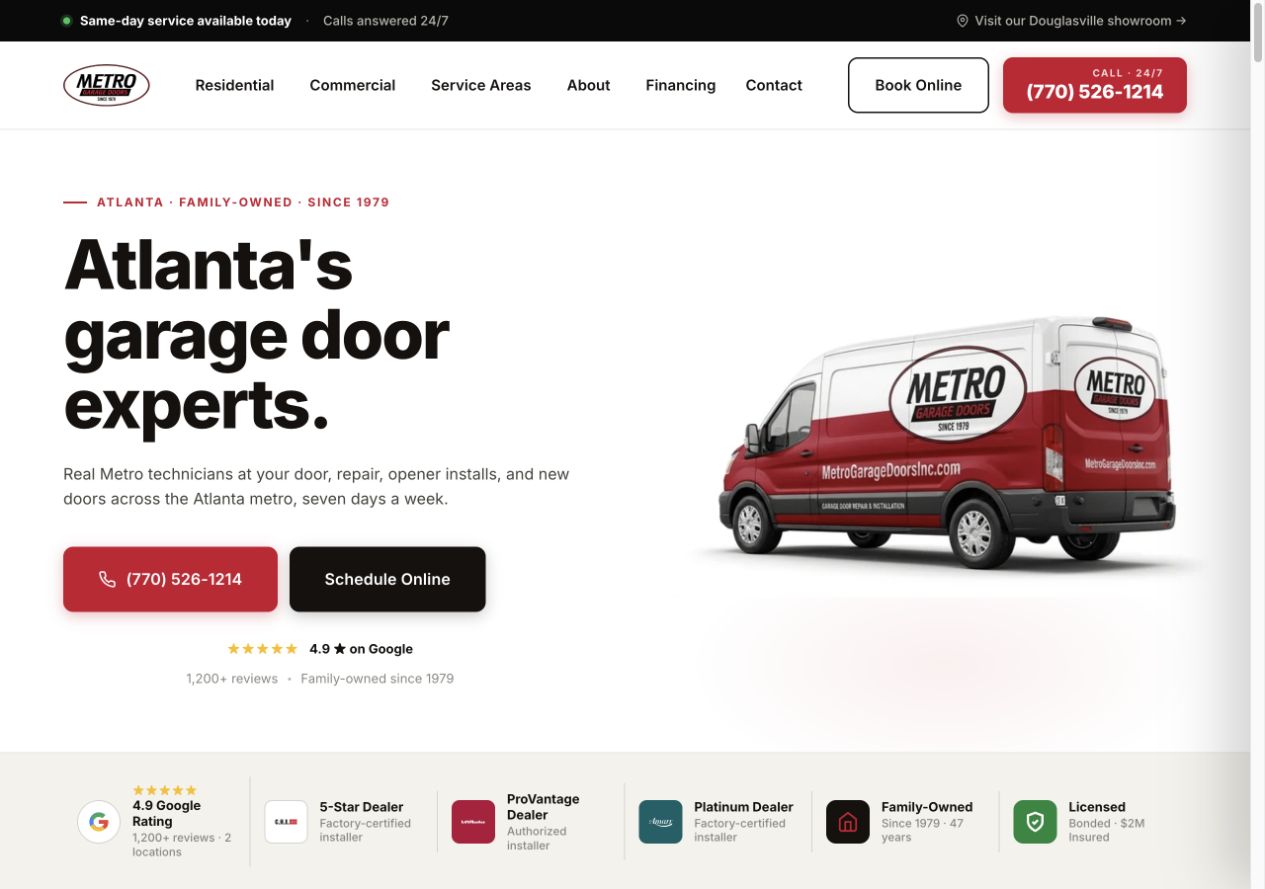
Residential and commercial navigation separates two types of work. The branded vehicle and prominent contact options make the business easy to identify and reach.
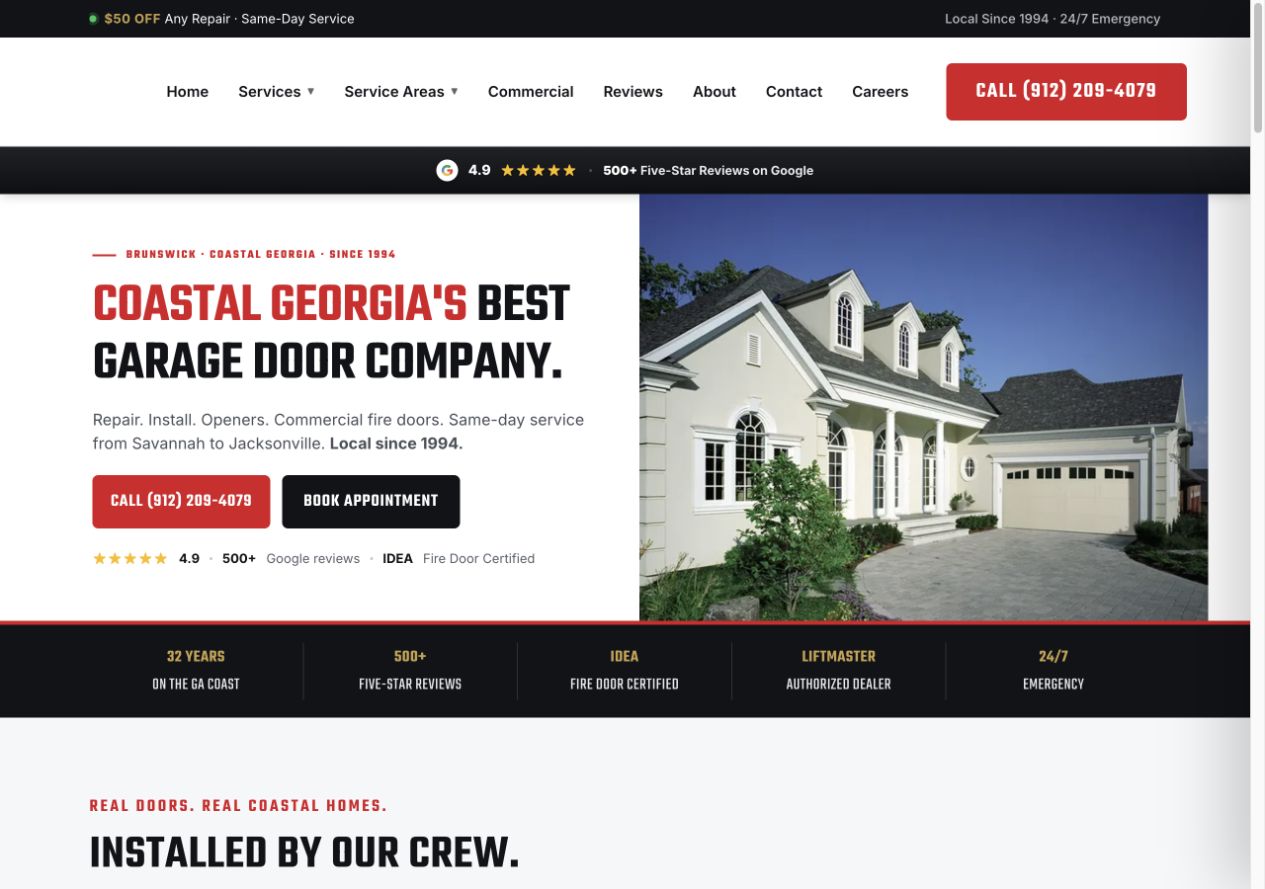
Coastal home imagery establishes the local setting. Service navigation, phone contact and appointment requests sit together in the opening layout.
Garage-door website design examples. Offers and review details belong to the captured designs; these are not plumbing client results.
Quips plans, designs and builds your agreed website pages. We prepare the copy from your service details, use your brand and photos, and check how customers reach the office before launch.
Explore our website serviceWe map the work you accept, the places you serve and the questions your office hears. A residential repair service, commercial plumbing team and remodel specialist need different page plans.
We explain your services and visit process using business details, job photos and customer questions. AI helps with research and drafts; our team edits the pages, and yours confirms qualifications, fees, offers and service claims.
Customers should be able to read the service details, check coverage and reach a contact option on a phone. We review navigation, form labels, keyboard access and error messages on mobile and desktop.
We test phone links, forms and any agreed booking links, including the customer's confirmation message and the request received by your office.
Give each visitor enough information to choose the right next step, whether they have a leak, a blocked drain or plans for a new water heater.
A homeowner with a leaking pipe needs to check whether you handle the problem and serve their address. Put the phone option beside the repair information, with clear answering hours.
Call to check availability or send a repair request.
Someone describing a blocked sink or a recurring backup should not have to choose a repair method. Explain the drain and sewer services you offer and what happens during the first visit.
Request a visit. Your team confirms the appropriate next step.
A failed water heater and a planned upgrade bring different questions. Show the tank or tankless work you actually offer, real installation examples and how an estimate is arranged.
Request a water-heater estimate. Your team confirms equipment and scope.
Build the menu around your actual work, then give customers a route from the service details to your office.
A drain-clearing page can lead to camera-inspection details when you offer that service. A water-heater page can explain repair and replacement options without asking visitors to decide which equipment they need.
On a water-heater page, pair an approved installation photo with a short account of the work: what the customer needed, what your team installed and why. Keep private customer details out, and use only qualifications and warranty terms your team has confirmed.
Review our service-page checklistThe form should help your office arrange the next conversation. We agree what to ask, where the request goes and what the homeowner sees after sending it.
Adapt these fields to the way your office works:
Using ServiceTitan, Housecall Pro or another system? We check the available forms or connection and agree the setup. Before launch, we send a clearly identified test request and check that it reaches the agreed inbox or system.
The form explains that this starts an estimate conversation. It asks for the information your office needs without requiring the customer to identify a fault.
We check the destination, notification and submitted information. We test failure messages too, so a customer knows how to retry or call when delivery is not confirmed.
The acknowledgement explains how follow-up works. It only describes an appointment as booked when the scheduling system has confirmed one.
Keep estimate requests, confirmed appointments and completed jobs separate. Any source tracking depends on consent and the records available.
Your current site may already have useful service pages, search visits and contact tools. We review them before deciding what to improve, carry over or replace.
For a rebuild, we agree the migration work and coordinate with whoever manages your domain, hosting and email. That makes the changeover part of the project plan.
Google’s guidance on moving site URLsKeep useful page addresses where possible. If a drain or water-heater page moves, map its old URL to the relevant replacement with an appropriate permanent redirect. Update internal links and the sitemap.
Review service pages, mobile calls, request forms, booking links and agreed tracking. Confirm email-related DNS records with the person managing the domain before changing hosting records.
Agree who monitors errors, indexing and inquiries during the transition, and who fixes problems. Search engines need time to recrawl changed pages; a redesign cannot promise unchanged rankings.
Decide which updates your team will make and which checks or changes you want Quips to handle after launch.
When pages or booking tools change, check that important content remains indexable and that images or third-party tools have not slowed the site or shifted its layout.
Google’s Core Web Vitals guidanceNew service areas, answering hours and service-call fees need accurate wording. Set an owner for those changes and a review process for new job photos, offers and qualifications.
Profile management and continued content work belong in the Plumbing Local SEO scope. A dedicated ads landing page can support one campaign alongside the wider website.
Bring the pages you have and the questions customers keep asking your office.
We discuss what customers need to find, which work you want to show and how your office handles requests. Then we recommend focused improvements or a rebuild.
The proposal sets out pages, content, platform, integrations, migration, price and review milestones. Confirm access, hosting, ownership and any ongoing support before starting.
You check the design, service details and claims. We test the agreed customer paths on desktop and mobile, then coordinate launch and handover.
We price the work after reviewing your current site and the pages you need. Content preparation, design, forms, integrations and migration all affect the scope. The proposal separates the build price from hosting, ongoing updates and other marketing services.
Timing depends on page scope, available photos and business details, access to your existing setup and design reviews. We agree milestones after that review. Tell us about a planned business launch or an expiring agency agreement at the start so we can account for it.
Yes, when the platform and site are suitable. Clearer drain-service information or a working estimate form may address the immediate problem. We review the content, search activity and contact paths before recommending focused improvements or a rebuild.
We choose the platform with you after reviewing your current setup, editing needs, contact tools and support requirements. The proposal names the platform and who can make changes; WordPress or another system is not assumed before that review.
Before work begins, we set out domain control, account access, website files, hosting, maintenance and what happens if you change providers. Bring your current hosting or agency agreement so we can check access and transfer responsibilities when planning a move.
The agreed build includes search foundations such as useful service pages, titles, internal links, mobile layouts and indexing checks. Ongoing Plumbing Local SEO, Google Business Profile management and new content are scoped separately. A new website does not guarantee rankings.
We check your current tools and the way your office schedules work. A request form, a booking link and a connection that creates a CRM record have different requirements. We agree the supported path, test it and make clear whether the customer has sent a request or received a confirmed appointment.
Tell us what your current site is missing. Let’s work out the pages, design and contact paths you need.
Get started